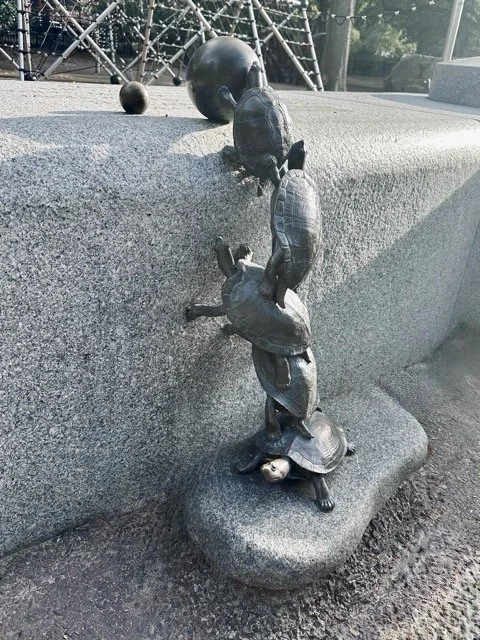
Why "Ask the Turtle"?
The first question colleagues ask is why the company is named Ask the Turtle. The answer lies in a Gloria Steinem story that captures our whole approach: asking questions first and walking alongside organizations on their path, rather than carrying them somewhere they don't want to go.
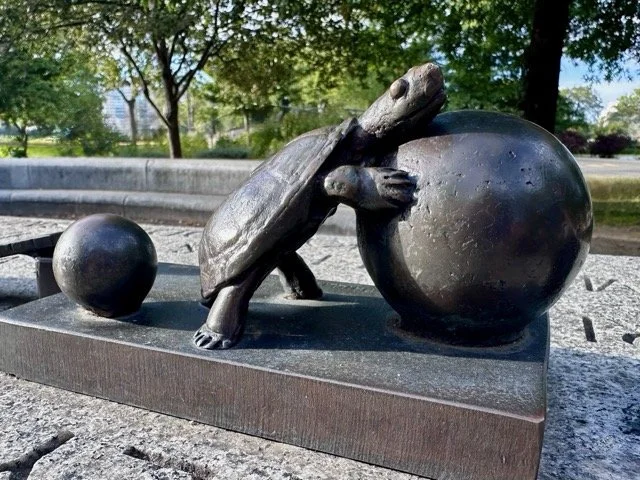
So with a lot of difficulty, I picked up this huge snapping turtle and slowly carried it down the road to the river. Just as I had slipped it into the water and was watching it swim away, my geology professor came up behind me. 'You know,' he said quietly, 'that turtle has probably spent all day crawling up the dirt path to lay its eggs in the mud on the side of the road. You have just put it back in the river.'
I felt terrible. It took me many more years to realize this parable had taught me the first rule of organizing. Always ask the turtle.
This story illustrates a common pitfall in traditional consulting: acting without understanding, imposing our own definitions of "help," and disrupting what is already working.
Predetermined solutions, every time.
- Acting without understanding your context
- Imposing their definitions of success
- Disrupting processes that are working well
- Assuming they know better than you do about your own organization
Your story matters more than best practices.
- Asking before acting
- Understanding your journey before suggesting direction
- Respecting organizational knowledge
- Supporting your vision, not directing it
Every nonprofit is crossing its own road, for its own reasons.
Before we suggest any strategy, we invest time understanding where you're trying to go, and why. Our role isn't to redirect your journey. It's to support the path that makes sense for your community and your donors. We do that work with nonprofits across Greater Boston, Massachusetts and New England.
We write about this as we go, in short pieces. Read the blog.