
Restricted Gifts aren’t R-rated. A Decision Guide for Major Gift Officers
We've all been there. You get a meeting scheduled with one of your top major gift prospects. This is a loyal annual donor with significantly greater capacity, and you've been trying for months to schedule a meeting to cultivate a multi-year pledge. You're prepared and excited as you sit down to talk. Following pleasantries, the donor says, "I'm glad you reached out. I've been wanting to do more for your organization." Perfect! This is what you've been hoping for! Before you ask any additional follow-up questions, the donor continues, "I've become really passionate about early childhood literacy and would love to make a significant gift dedicated to expanding your reading programs."
You remain calm and cheerful, but inside you've been hit with unexpected news. The donor wants to make a RESTRICTED GIFT…
Did this story cause your heart rate to increase? Palms to sweat? How do you respond in this situation? This is one of the most nuanced situations we face as development professionals. While unrestricted funding is almost always preferred, there's often a greater opportunity if we thoughtfully incorporate restricted gifts into our major gift strategy.
Before you attempt to steer your donor in a direction they aren't trying to go, consider the following questions about the gift restriction and the potential impact on your organization's mission:
Does the donor's priority align with your organization's mission?
Is this work you're already doing that could be expanded?
Is this work you're not doing but have wanted to start?
How would greater funding for this initiative impact your organization's outcomes?
If it is not aligned with your mission, is it against your core values?
How does your decision to accept or decline this gift impact your relationship with the donor?
When deciding on restricted funding, it is essential to collaborate with others within your organization. Leadership buy-in is a requirement—accepting restricted funds without organizational alignment can strain resources, distract from strategic priorities, and create challenges to donor relationships down the road. Additionally, determine who else in the organization will be impacted by increased attention to this area.
Finally, I'd like to suggest a radical idea that may yield surprising results. If the donor's priority and your organization aren't in complete alignment, recommend another organization for the donor to support that does this work better than you. If the donor is truly passionate about this specific issue, and your organization helps them address the problem, your relationship with the donor will be even stronger. Take it one step further and offer to make an introduction to your peer at an organization specializing in the work the donor wishes to fund.
This is what I mean by asking the turtle where it's going. Sometimes the answer is "somewhere you can't take them, but you can help them get there."
As fundraisers, it's excruciating to walk away from a major gift, and we can be tempted to "make it work" for various reasons: pressure from leadership, budget shortfalls, or simply the momentum of being in the room with an excited donor. When we pause to put our organization's mission first while respecting the donor's intentions, we create opportunities for the greatest impact.
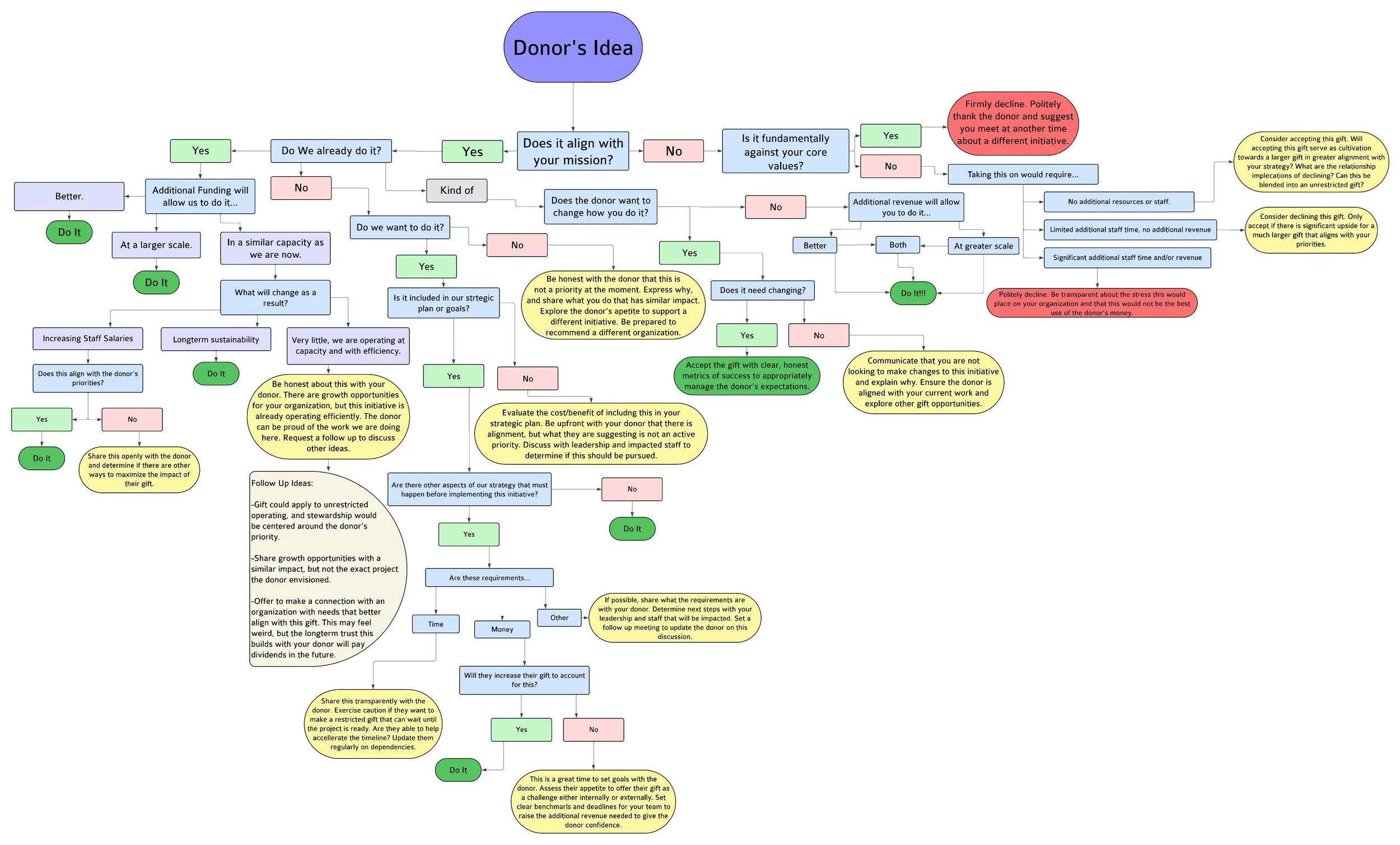
I've built a decision tree below to help you evaluate your options when a donor suggests a significant gift that's restricted to a specific project or initiative. I'd love to hear your thoughts about other scenarios not covered here and examples of times you've been faced with these decisions.
Nate Warren is the founder of Ask the Turtle, a nonprofit development and fundraising consultancy in Boston, Massachusetts. He works with nonprofits across Greater Boston and New England on fundraising strategy, board training, major gifts and grant support.
Book a free conversation Grant-funded training Free fundraising tools
